
Overview
Cricket, flag football and padel are following pickleball’s fast growth, and each one puts new demands on park fields, courts and maintenance crews. The article explains what each sport means for turf wear, scheduling, inspections and lifecycle costs. It also shows how a strong asset inventory, preventive maintenance based on actual use, mobile work logging, GIS mapping and cost tracking per asset help public works and parks teams plan ahead instead of scrambling.
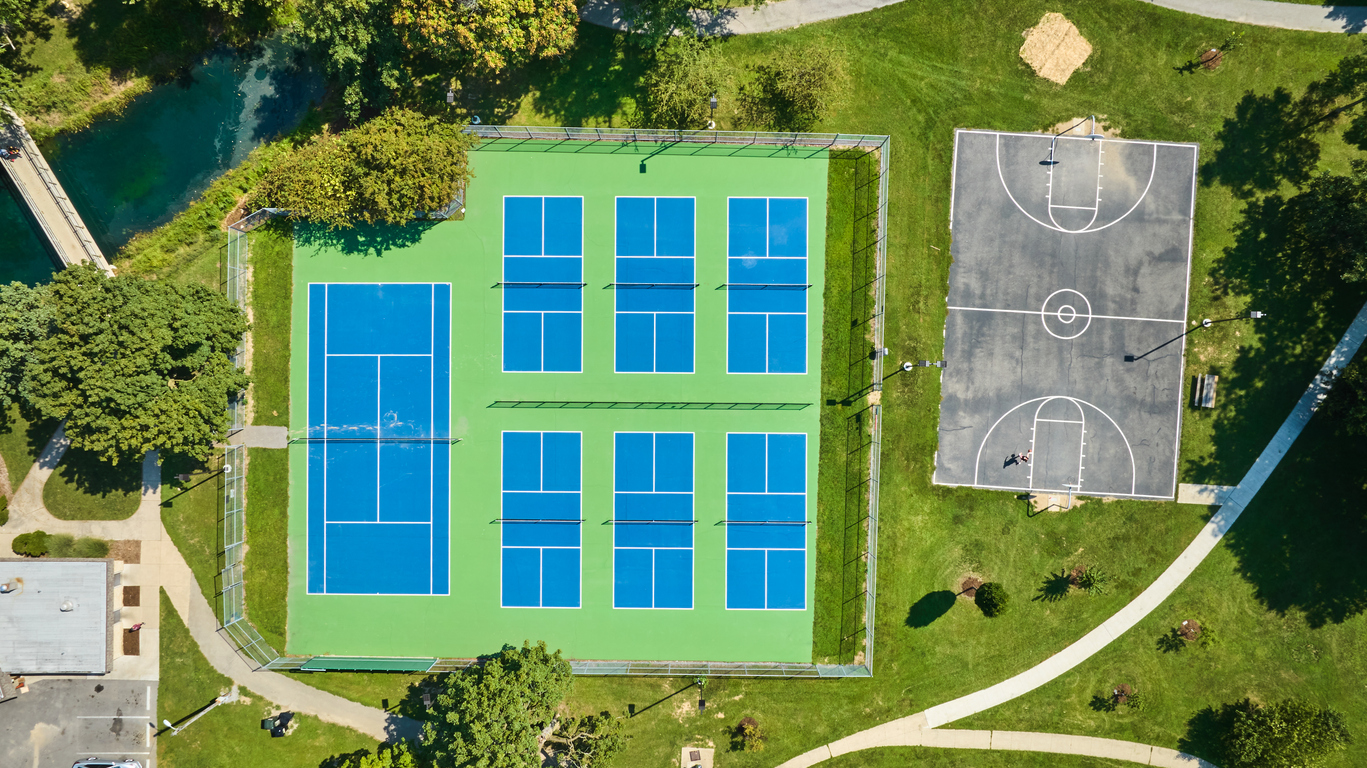
Remember when pickleball was “that thing a few people played on the old tennis court”? Now it’s been the fastest-growing sport in America five years running, with 24.3 million players in 2025, according to SFIA’s 2026 Topline Participation Report.
A lot of parks departments found out about that growth the hard way. Lines taped onto tennis courts. Neighbors calling about the noise. Surfaces wearing out faster than anyone planned. Crews patching things together with no real record of what was out there or what it cost to keep up.
So here’s the pitch (pun intended). Three sports are on a similar curve right now: cricket, flag football and padel. If we pay attention early, we can plan for them instead of scrambling.
Cricket: big fields, long games, loyal players
Cricket is one of the most popular sports on the planet, and it’s been played in American parks for a long time. What’s changed is how fast it’s growing here and how visible it’s become. The U.S. co-hosted the ICC Men’s T20 World Cup in 2024. Major League Cricket has been building purpose-built venues, including a new ground in Pomona, California, this year. And cricket returns to the Olympics at LA28.
Locally, the demand comes from communities that have been playing for years wherever they could find space. In Scranton, Pennsylvania, players were using a church parking lot and school fields before the city moved to build its first official pitch. Fresno broke ground on two new pitches in 2025. In the Seattle area, advocates counted more than 3,100 organized players and 200+ teams back in 2022, and said growth was “severely constrained by the lack of facilities.”
What it means for maintenance:
- Cricket takes a lot of space. A full field is a large oval, often more than 20,000 square yards, so it usually shares turf with soccer, baseball or other uses.
- The pitch itself, the 22-yard strip in the middle, is its own asset. Natural turf pitches need specialized care. Synthetic mats over a concrete or compacted base have their own replacement cycle.
- Matches can run for hours, which puts a lot of wear on one field in one day.
One of the best examples comes from Williamson County, Texas. Their youth cricket field is capped at 18 hours of play per week because of shallow, rocky soils, and it closes in December and January for maintenance. That’s usage-based maintenance planning in the real world. You can only make that kind of call well if you know how much the field gets used and what it takes to recover.
Flag football: the sport that fits everywhere
Flag football used to be a pickup game. Now it has a real pipeline. It’s on the LA28 Olympic program. In May 2026, New Jersey became the 18th state to sanction girls’ high school flag football. And according to NFL Flag Football, roughly 69,000 girls played high school flag football in 2024-25, up from 15,000 just three years earlier.
That’s not a typo. It grew more than four times over in three years.
For parks, the appeal is easy to see. Fields are smaller than a full football field, there’s no tackling gear, and there are leagues for every age, from little kids to adult rec.
What it means for maintenance:
- Smaller fields mean you can fit several on one rectangle. That’s great for scheduling and tough on turf, because wear builds up in the same spots game after game.
- You’re lining and re-lining more often, and coordinating more when the same field hosts soccer Saturday morning and flag football Saturday afternoon.
- Youth and girls’ programs are growing fastest, which usually means more weekday evening use. Lights, restrooms and parking all rack up more hours too.
With flag football, you’re mostly asking existing fields to work harder. That shows up in your work order history long before it shows up in a budget request, as long as someone is tracking it.
Padel: the racquet sport with walls
If you haven’t seen padel yet, picture a cross between tennis and pickleball, played inside a glass-and-mesh enclosure, where the ball can come off the walls. It’s huge in Spain and much of Europe, and it’s catching on here fast.
SFIA started tracking padel and counted about 1.07 million U.S. players in 2025. The U.S. Padel Association reports more than 1,000 courts in 31 states. Playtomic’s 2026 Global Padel Report, prepared with PwC, found 250 new U.S. padel clubs and 330 new courts in 2025 alone. That same report makes an interesting point: pickleball is acting as a gateway to padel rather than a competitor.
Most U.S. padel is in private clubs right now. But demand like this tends to reach the parks department sooner or later, often as a request to “just add a couple of courts.”
What it means for maintenance:
- A padel court is a different kind of asset than a tennis or pickleball court: glass panels, steel framing, mesh, synthetic turf with sand infill and usually lighting.
- The turf needs regular brushing and infill top-ups. The glass needs inspection and the occasional replacement. Those recurring tasks need to live somewhere besides one person’s memory.
- Each court costs more to build, so lifecycle and replacement planning matter more.
What pickleball should have taught us
To be honest, the hard part of a fast-growing sport starts after the ribbon cutting. It’s the wear, the scheduling conflicts, the inspections, and the question from council about why you need more money for something you just built.
That’s where good asset management earns its keep. Before the next trend fully lands, here’s what to have in place:
- Add new facilities to your asset inventory on day one, with the right asset types. A cricket mat, a padel enclosure and a flag field overlay each deserve their own record.
- Set preventive maintenance schedules based on how each asset is actually used, then adjust as you learn. Williamson County’s 18-hour cap is a great model.
- Make it easy for crews to log work from their phones in the field, so the history is real and not pieced together later.
- Map it in GIS. Overlapping field layouts are much easier to manage when everyone can see them.
- Track costs per asset, so you can tell the budget story with real numbers, whether you’re setting rental fees or making the case for the next facility.
This is the work we think about every day with AssetWorks EAM, and it’s the part of parks we find most interesting. The sport gets the headlines. The maintenance data is what keeps it playable.