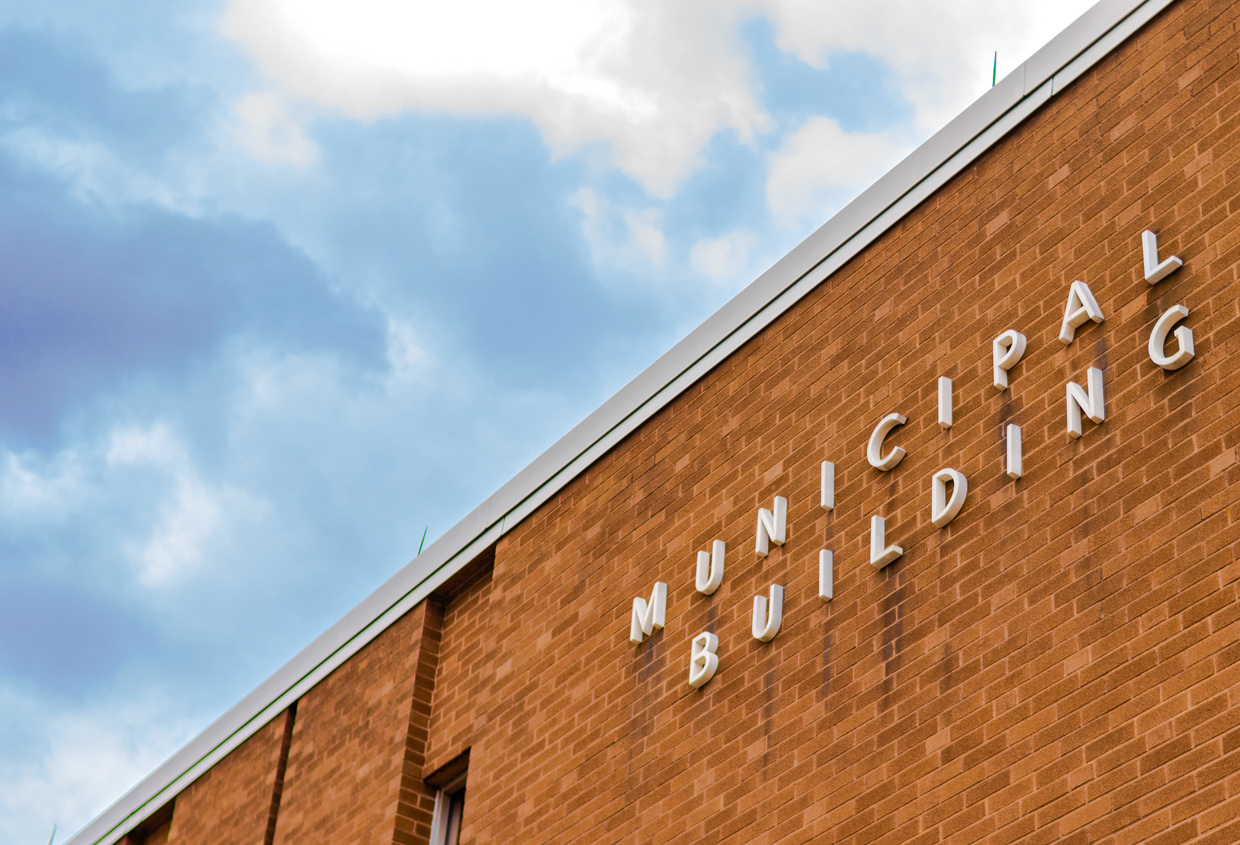

Every municipality — whether it serves 10,000 residents or 500,000 — is responsible for an enormous portfolio of physical assets. Roads, water mains, sewer lines, stormwater systems, bridges, sidewalks, traffic signals, buildings, parks, playgrounds, fleet vehicles, and the equipment used to maintain all of it. These assets represent decades of public investment, and they’re the infrastructure that residents and businesses depend on every day.
The challenge that cities and counties face isn’t a lack of awareness about the importance of maintaining these assets. It’s a lack of resources relative to the scale of the problem. Budgets are tight. Staff is stretched thin. Infrastructure is aging faster than it can be replaced. And the manual, spreadsheet-driven processes that many municipalities still use to track their assets can’t provide the visibility needed to make smart decisions about where limited dollars should go.
Municipal asset management is the discipline of managing these assets strategically. Not just fixing what breaks, but understanding what you have, what condition it’s in, what it costs, and what investments will produce the best long-term outcomes for the community. Here’s what that looks like in practice for cities and counties.
The Unique Challenges Municipalities Face
Municipal asset management shares a lot of common ground with asset management in any large organization, but cities and counties face several challenges that are specific to the public sector environment.
- Funding is constrained and competitive. Municipal budgets are funded primarily through taxes, fees, and intergovernmental transfers; all of which are subject economic conditions, and competing priorities. The public works department isn’t just competing for funding against other departments. It’s competing against every other community priority, from public safety to education to social services. Every capital request needs to be justified with data, not just need.
- Decision-makers change. Elected officials turn over on election cycles, and each new council or board may have different priorities. An asset management program that depends on a single champion is vulnerable to leadership changes. The program needs to be institutionalized, built into the organization’s processes and data systems, so that it persists regardless of who sits in the decision-making seat.
- The public is paying attention. Citizens see potholes, broken playground equipment, water main breaks, and deteriorating buildings. They report problems, attend council meetings, and vote. Municipal asset management isn’t just an internal operations concern, it’s also a public accountability concern. Agencies that can demonstrate they’re managing infrastructure responsibly build trust. Those that can’t face public criticism and political pressure.
- Staff capacity is limited. Many municipalities don’t have dedicated asset management professionals. Public works directors, maintenance supervisors, and operations staff are handling asset management responsibilities alongside their other duties. The tools and processes need to work within these constraints. They need to make people’s existing jobs easier, not create new administrative burdens.
- Asset diversity is extreme. A single municipality might be responsible for 200 miles of roads, 150 miles of water pipe, 50 buildings, 30 parks, 500 vehicles, thousands of signs and signals, and tens of thousands of individual components. Each asset type has different maintenance needs, different lifecycles, different failure modes, and different risk profiles. Managing this diversity requires a system that can handle all of it, not separate tools for each category.
Starting Where You Are
The idea of implementing a comprehensive municipal asset management program can feel overwhelming, especially for organizations that are starting from a low baseline. The key is to understand that you don’t need to inventory every asset, assess every condition, and build a 30-year financial plan before you see value. You need to start somewhere practical and build from there.
Most municipalities find that the best starting point is the assets where the consequence of failure is highest and the current visibility is lowest. For many cities, that means roads and water infrastructure — they’re the most expensive to replace, the most disruptive when they fail, and often the least well-documented in terms of condition and maintenance history.
Starting with a focused scope also makes the organizational change more manageable. Rather than asking every department to adopt a new system and new processes simultaneously, you bring one department online first, demonstrate results, and use that success to build momentum for expanding to other asset classes and departments. The City of Boynton Beach, Florida, took this approach — they started with their Fleet department, proved the concept, and then expanded to Facilities, Roads and Streets, and Parks and Grounds on the same platform.
Building Your Asset Inventory
The foundation of municipal asset management is knowing what you have. An asset inventory captures the basic information about each asset — what it is, where it is, when it was installed or constructed, what condition it’s in, and what it would cost to replace.
For municipalities, GIS integration is particularly valuable at this stage. Most cities and counties already maintain geographic data about their infrastructure — parcel maps, utility maps, road centerlines. When your asset inventory is linked to your GIS, every asset has a location on a map, and field crews can interact with assets spatially — pulling up the maintenance history of a water valve by tapping it on a map, or seeing all the open work orders along a road segment before dispatching a crew.
The inventory doesn’t need to be perfect on day one. Start with the critical data fields — asset type, location, installation date, condition rating, and replacement cost — and refine from there. Field crews who are already out inspecting and maintaining assets can update inventory records as part of their normal workflow if they have mobile tools that make it easy. Over time, the inventory becomes more complete and more accurate as an organic byproduct of daily operations rather than a separate data collection project.
Moving from Reactive to Proactive Maintenance
Most municipalities operate in a primarily reactive mode — fixing things when they break or when residents complain. This approach is understandable given resource constraints, but it’s also the most expensive way to manage infrastructure over the long term. Emergency repairs cost more than planned ones. Assets that aren’t maintained proactively deteriorate faster and need to be replaced sooner. And the cascading effects of failures — flooded streets from a water main break, traffic disruptions from a signal outage — create costs that extend well beyond the repair bill.
The shift to proactive maintenance doesn’t require dramatically more resources. It requires better information and better processes. When you know the condition of your assets and can predict when they’ll need service, you can plan maintenance during normal working hours, bundle work in the same geographic area to reduce mobilization costs, replace components before they cause failures that damage surrounding infrastructure, and schedule work during off-peak times to minimize public disruption.
Asset management software supports this shift by automating preventive maintenance schedules, generating work orders when service is due, and tracking completion to ensure nothing falls through the cracks. The data the system collects during maintenance — what was done, what it cost, what condition the asset was in — feeds directly into the planning and budgeting process, creating a virtuous cycle where better maintenance generates better data which enables better planning.
Capital Planning and Budget Justification
For municipal asset managers, the ability to connect asset data to capital planning is where the program delivers its most strategic value.
Every year, municipalities face difficult decisions about where to invest their capital dollars. Which roads get repaved? Which buildings get a new roof? Which water mains get replaced? Without data, these decisions default to political influence, squeaky-wheel complaints, or the institutional memory of long-tenured staff. None of these are reliable methods for optimizing a multimillion-dollar capital budget.
When your asset management system contains condition data, maintenance history, lifecycle cost projections, and replacement cost estimates for every major asset, the capital planning conversation transforms. Instead of subjective requests, you present prioritized investment recommendations backed by data — which assets are in the worst condition, which ones will cost the most if deferred, which interventions deliver the greatest return per dollar.
This capability is particularly powerful when presenting to elected officials. Council members and commissioners respond to data. Showing them that a road segment is rated “poor” with an expected rehabilitation cost of $400,000 now versus $1.2 million if deferred for five years is a fundamentally different conversation than asking for more road funding. The asset management system provides the evidence that makes the case.
Long-term financial forecasting extends this further. By projecting asset deterioration and replacement needs over a 10-, 20-, or 30-year horizon, municipalities can identify funding gaps before they become crises, develop sustainable funding strategies, and communicate to the public what it actually costs to maintain the community’s infrastructure at the service levels they expect.
Service Requests and Public Accountability
Municipalities don’t just manage assets for internal operational reasons — they manage them to serve the public. Citizens expect to be able to report problems and receive timely responses. Elected officials expect to be able to track how well the organization is performing. And regulatory bodies expect to see documentation that assets are being maintained to required standards.
Service request management within an asset management platform connects citizen-reported issues to the assets they affect. A pothole report isn’t just a work order — it’s a data point associated with a specific road segment that feeds into the condition assessment and capital planning for that asset. Repeated service requests in the same area signal a systemic issue that warrants a more comprehensive intervention rather than another patch.
Tracking service request resolution times, work order completion rates, and maintenance spending by asset type and geographic area gives municipal leadership the metrics they need to demonstrate performance to the public and make informed resource allocation decisions. When that data is available through dashboards and reports rather than buried in filing cabinets, accountability becomes transparent and continuous rather than something that only surfaces during budget season or a council meeting.
The Role of Technology
Municipal asset management is a discipline, not a technology purchase. The principles — know what you have, understand its condition, plan proactively, invest strategically — can be applied with any set of tools. But the right technology makes the discipline dramatically easier to execute and sustain.
Enterprise asset management software brings all of the elements together in one platform: asset inventory with GIS integration, preventive maintenance and inspection scheduling, work order management, service request intake, parts and materials tracking, capital planning, and reporting. For municipalities that also manage fleet vehicles, the same platform can handle fleet maintenance, fuel management, and equipment tracking — eliminating the need for separate systems.
Mobile tools are especially important for municipal operations. Field crews, inspectors, and maintenance staff spend their days at job sites, not at desks. The ability to pull up asset data, complete inspections, update work orders, and log time from a phone or tablet — even in areas without reliable cellular connectivity — means that data gets captured where the work happens, not transcribed later from paper notes.
The technology should serve the people using it, not the other way around. The best municipal asset management implementations are the ones that make field workers’ jobs easier, give supervisors better visibility, and provide leadership with the data they need to make decisions — all without requiring a dedicated IT team to maintain.
Better Data, Better Decisions, Better Communities
Municipal asset management isn’t about bureaucracy or compliance for its own sake. It’s about making the most of the resources the community has entrusted to you. Cities and counties that manage their assets well aren’t necessarily the ones with the biggest budgets — they’re the ones that know what they have, understand what it needs, and invest their dollars where they’ll have the greatest impact.
The discipline builds over time. Year one is about establishing the foundation — getting assets into the system, setting up maintenance schedules, and building the data habits that sustain the program. Year three is about using accumulated data to drive smarter capital planning and measurably improve operational efficiency. Year five and beyond is about having a mature asset management program that continuously optimizes how the municipality maintains, replaces, and invests in the infrastructure that defines the community.
AssetWorks EAM is an enterprise asset management platform built for the complexity of municipal operations. With GIS integration through Esri ArcGIS, capital planning tools, mobile field applications, service request management, and the ability to manage every asset type — from roads and water systems to parks, buildings, and fleet vehicles — in a single system, it gives cities and counties the foundation for smarter, more sustainable asset management. To learn more, visit assetworks.com/eam.