


Overview
Fleet operations often run on a patchwork of separate systems for GPS tracking, fuel management, work orders, and reporting, each doing its own job well but sharing no data with the others. This piece explains the hidden cost of that disconnection, the manual reconciliation, duplicate entry, and blind spots it creates, and walks through how the AssetWorks FleetFocus ecosystem, including FuelFocus, FuelFocusEV, AssetWorks GPS, MobileFocus Enterprise, KeyValet, Asset Analytics, API Suite, Integrated Business Solutions, and AssetWorks EAM, feeds one operational record instead of running as separate tools a fleet has to reconcile on its own.
A fleet rarely runs on just one piece of software. It runs on several, usually purchased at different times, from different vendors, for different reasons. GPS tracking came from one provider, fuel cards from another, maintenance tracking got added when the paper work order process finally broke down, and somewhere along the way a spreadsheet appeared to hold whatever the other systems don’t share with each other.
None of these tools are bad on their own. The problem shows up in between them: in the manual work of pulling a report from one system, checking it against another, and re-entering the same information a third time because nothing actually passes data between platforms. That work doesn’t show up on an invoice or a line item anywhere. It shows up as time, the kind that gets absorbed into a Tuesday afternoon instead of tracked as a cost.
The Hidden Tax of Systems That Don't Talk to Each Other
A work order created in the shop doesn’t know a vehicle’s fuel efficiency has been sliding for weeks, because that data lives in a separate fuel management portal nobody cross-references during routine service. A location update from a GPS platform doesn’t automatically flag that a vehicle is coming due for inspection, because inspection records live in a different login entirely. Each system does its own job well. None of them talk to the others, so the work of connecting the dots falls on whoever has time to go looking for it, which in practice often means it doesn’t happen until something breaks.
This is where “disconnected” turns into an operational cost rather than just an inconvenience. A fleet manager pulling together a monthly report might spend hours exporting data from three or four platforms into a spreadsheet before analysis can even start. A technician troubleshooting a recurring issue might not have access to the fuel or usage data that would point to the actual cause. Someone assigning a vehicle to a route might not know it’s about to come due for service, because that information sits in a system they’ve never had a login for. The tools were supposed to save time. Somewhere along the way, keeping them fed and reconciled became a job of its own.
One Record, Many Inputs
The answer isn’t fewer tools. Most fleets still need GPS tracking, fuel management, mobile workflows, and reporting, and that need isn’t going away. What matters is whether those tools were built to feed one underlying record or built separately and left to the fleet to stitch together afterward. That’s really the difference between a fleet management system and a fleet management ecosystem: one is a single tool doing one job, and the other is a set of tools designed from the start to feed the same core system instead of running alongside it.
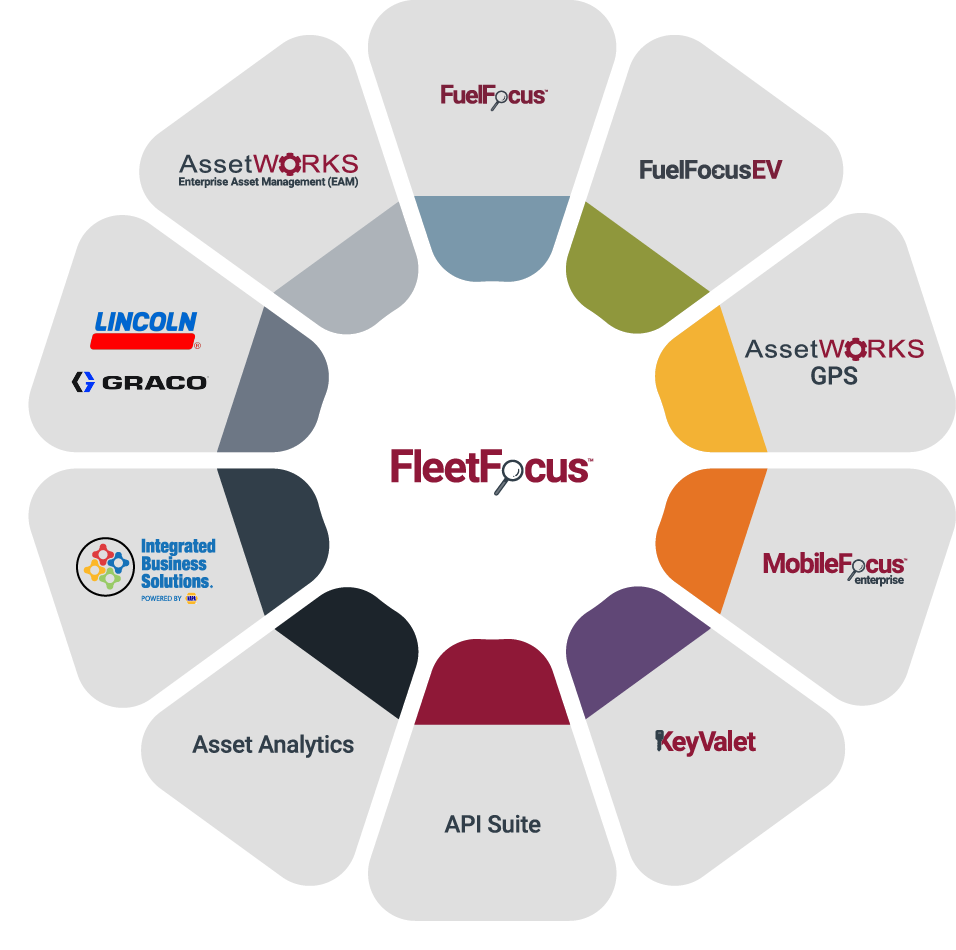
AssetWorks built the FleetFocus ecosystem around that idea, with a set of connected solutions that feed the same core record rather than operating as separate systems a fleet has to reconcile on its own:
- FuelFocus captures fuel purchases directly against a vehicle’s record, instead of sitting in a separate fuel management portal.
- FuelFocusEV does the same for electric vehicle charging data, so charge sessions and cost per kWh live in the same record as everything else.
- AssetWorks GPS feeds location and utilization data into the same system that tracks maintenance and work orders.
- MobileFocus Enterprise puts inspections, work orders, and asset condition updates directly into the hands of technicians and operators from the field.
- KeyValet manages keys and vehicle access as part of the same operational record, not a separate check-in log.
- Asset Analytics draws reporting and KPIs from the data already in the system, instead of a spreadsheet someone assembled by hand.
- Our API Suite gives a fleet’s own financial, HR, and inventory systems a direct line into FleetFocus data, syncing purchase orders, work order history, and asset updates without a manual export.
- FleetFocus connects to parts management platforms like NAPA’s IBS HUB, so part requests, fill rates, and invoicing pull from the same shop floor data instead of a separate parts room system.
- FluidFocus captures fluid dispensing (oil, grease, and other shop fluids) directly against the work order it’s used on, with standard integrations already built with fluid partners Lincoln and Graco, so fluid costs aren’t a blind spot in total cost of ownership.
- AssetWorks Enterprise Asset Management (EAM) extends that same connected record to the non-vehicle assets an organization is also responsible for.
The point of building it this way isn’t to sell more modules. A fleet using these solutions together isn’t running six separate systems and hoping someone remembers to compare them at the end of the month. It’s running one operational record that a fuel transaction, a GPS ping, a completed inspection, and a work order all update automatically, without anyone exporting a report to make it happen. The alternative most fleets are used to is treating integration as their own responsibility: building custom data feeds between vendors, hoping an API doesn’t change without notice, and accepting that some of it will always be reconciled by hand. With the FleetFocus ecosystem, that connective work isn’t something a fleet has to build and maintain on top of the software. It’s already part of how the ecosystem was designed.
What Actually Changes Day to Day
For planning, this shows up first in preventive maintenance. A PM schedule can account for actual usage, mileage, and location data instead of a fixed calendar interval, because that information is already in the same system building the schedule. A work order opened in the shop already carries a vehicle’s fuel and inspection history alongside it, so a technician isn’t troubleshooting a symptom without the context that explains it.
Day to day, it shows up in fewer surprises. Preventive maintenance scheduling flags a vehicle before a due date slips instead of after, work orders route to the right shop or technician without someone manually assigning them, and a dispatcher assigning a vehicle to a route is working from status information that’s actually current, not whatever was true the last time someone remembered to update a spreadsheet. None of it depends on someone checking a second system first, because there isn’t a second system to check.
The bigger shift is what disappears rather than what gets added: the reconciliation work, the duplicate entry, the blind spots between platforms, and the quiet cost of not knowing what a fleet doesn’t know. Disconnected systems don’t fail loudly. They just generate work that never shows up as a line item, until someone adds up how much of the week went into follow-up, and it turns out to be more than anyone expected.
Every disconnected system a fleet runs adds a small tax on someone’s time, paid out in reconciliation, duplicate entry, and decisions made without the full picture. Fixing that doesn’t require more tools. It requires the ones already in place working from the same record.