


Overview
Fleet performance is rarely a single metric; it’s a composite of asset condition, safety, fuel and energy cost, utilization, and field execution, each often tracked in a different system. This piece walks through the pain point behind each of those areas and how FleetFocus, AssetWorks GPS, FuelFocus, FuelFocusEV, KeyValet, MobileFocus Enterprise, and the Asset Analytics Platform address them as one integrated system rather than six disconnected ones.
When someone asks how the fleet is performing, the easy answer is a single number: uptime, cost per mile, or last quarter’s maintenance spend. The honest answer is more complicated, and if you’re the one accountable for that answer at the leadership level, a single number was never going to cover it. Fleet performance is really a composite of several different systems, each producing its own version of the truth, and the real work is seeing all of them at once.
That’s a harder problem than it sounds. Asset condition lives in one system, location and safety data in another, fuel and energy costs in a third, vehicle utilization somewhere else entirely, and field execution in whatever form technicians and drivers happen to be using that week. Ask for a complete picture and what you often get instead is several partial ones, none of which reconcile cleanly with the others.
This isn’t just a reporting inconvenience. It’s the difference between a budget request that’s approved on the first pass and one that gets sent back for more detail, between spotting a safety or compliance risk early and finding out about it after an incident, and between capital planning built on real lifecycle data and capital planning built on a best guess. The fleets that answer the performance question well have usually done one thing differently: they’ve connected these systems instead of leaving each one to report on itself.
It also helps to be honest about why this has gotten harder rather than easier. Telematics, connected vehicles, and EV charging infrastructure have all added new systems and new data streams to what used to be a simpler equation of vehicles, fuel, and a maintenance log. Each addition was justified on its own merits, and each one also added another place performance data can get stuck. That’s not a reason to slow down adoption of new fleet technology. It’s a reason to be deliberate about how those systems connect back to a single source of truth.
Cost Control Starts With What You Can See
The foundation of that picture is asset and maintenance data, and that’s usually where the budget conversation breaks down first. Without a system tying PM schedules, work orders, labor, and parts together, lifecycle cost analysis becomes a multi-week manual exercise for whoever gets asked to build the case for a budget increase or a replacement cycle. AssetWorks FleetFocus exists to close that gap: a single system of record for asset management, work orders, technician assignments, and inventory, so a total cost of ownership figure is something you can pull up rather than something you have to build from scratch every time leadership asks for it.
That system of record also carries more than 200 out-of-the-box reports and dashboard KPIs, along with ad-hoc reporting for the questions that don’t fit a standard template. The practical effect is that a budget conversation can start from an agreed-upon number instead of a debate about whose spreadsheet is right. That’s a small distinction on paper and a significant one in a room where capital gets allocated.
Location and Safety Aren't Separate Conversations
Real-time visibility into where vehicles are and how they’re being driven used to be treated as its own initiative, bolted onto the fleet system as an afterthought. That approach creates exactly the kind of disconnected data leadership eventually has to answer for, especially when a safety incident or compliance question surfaces and the location data lives somewhere the maintenance team can’t see it.
AssetWorks GPS closes that gap with a direct, two-way integration into FleetFocus, so telematics, driver behavior, and AI dashcam data feed the same system that tracks maintenance and cost, instead of sitting in a separate platform leadership has to check on its own.
The integration runs both directions: trouble codes and engine hours captured in the field flow into FleetFocus to trigger proactive maintenance, while the same hardware supports secure fueling, removing the need for a second device at the pump. For leadership, the outcome is fewer standalone safety and compliance reports to reconcile against the maintenance record.
Fuel and Energy Are Still a Top-Line Expense
Fuel remains one of the largest controllable costs in most fleets, and it’s uniquely exposed to market volatility in a way payroll or parts spend isn’t. FuelFocus automates the tracking of fuel and fluid consumption against FleetFocus data in real time, which is what turns “we think we’re overspending on fuel” into an actual, defensible number. Organizations that tighten this kind of fuel accountability commonly see consumption savings and meaningfully less shrinkage, the kind of recovered spend that’s easy to lose track of without a system validating every transaction against the vehicle it was issued to.
That same discipline now has to extend to electricity as more fleets bring EVs into the mix. FuelFocusEV manages charging costs, scheduling, and load balancing with the same rigor FuelFocus applies to liquid fuel, and reports on station health and charging trends the same way FuelFocus reports on a fuel island. So electrification doesn’t create a second, disconnected cost center to track separately at exactly the point in a fleet’s transition when that visibility matters most.
Utilization Hiding in Plain Sight
Fleet size is one of the quieter line items on a balance sheet, and it’s easy to overspend on without noticing, because an underused vehicle doesn’t generate an alert the way a breakdown does. Motor pools are supposed to solve for this by increasing utilization across a shared set of vehicles, but a motor pool run through manual reservations and a physical key drawer usually just moves the inefficiency somewhere less visible, and often adds staff time as a middleman for every booking. KeyValet automates reservations, checkout, and billing, and integrates directly with FleetFocus, so utilization data is part of the same system already informing replacement and budget decisions, rather than a side calculation nobody has time to run.
There’s a secondary benefit worth naming for anyone tracking sustainability commitments alongside cost. Higher utilization through shared, around-the-clock vehicle availability directly reduces the fleet footprint needed to serve the same demand, a metric increasingly showing up in board-level reporting alongside cost per mile and uptime.
Execution Still Happens on the Ground
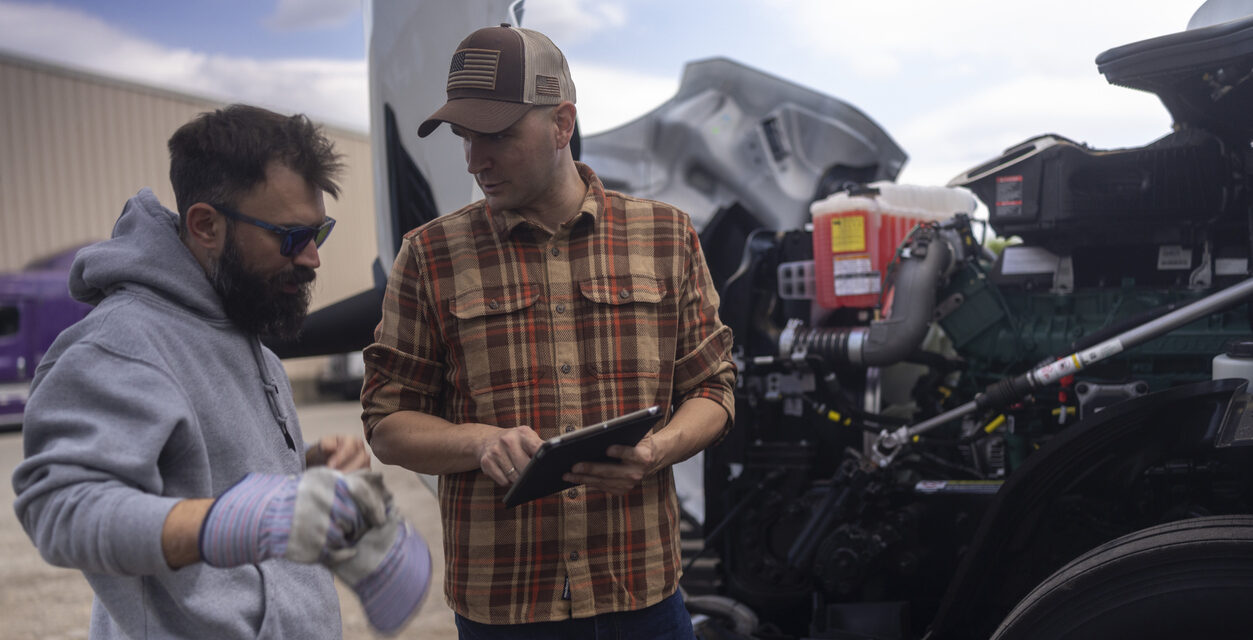
All of this depends on data actually getting into the system in the first place, and that’s where a lot of otherwise solid fleet strategies quietly fail. If technicians are working from paper forms or waiting in line for a shared terminal, the data leadership eventually sees is stale by the time it reaches a dashboard. MobileFocus Enterprise, including the FleetFocus EDGE interface, extends the system to whatever device is closest, on the shop floor, in the yard, or on the road, so information moves into FleetFocus as work happens instead of days later.
The suite also accounts for locations without reliable connectivity. Fleet Connect operates disconnected and syncs once a signal is available, so a fleet spread across a region doesn’t end up with permanent blind spots wherever coverage is weak. It’s also worth factoring into workforce planning. A fleet operation running on modern tools is an easier one to staff and retain in a tight labor market, which is its own kind of operational cost avoided.
Seeing the Whole Picture
Even with all of this connected, raw access to several well-integrated systems still isn’t the same as an answer. That’s the role that Asset Analytics Platform plays – consolidating data from FleetFocus, GPS, fuel, EV charging, and motor pool systems into standard KPIs and dashboards built for exactly the kind of question leadership tends to ask on short notice. Instead of commissioning an analysis every time the board wants a cost or utilization update, the reporting already exists.
That also changes who can access the answer. When reporting depends on one analyst pulling data from several places, the picture is only as available as that person’s calendar. Standard KPIs and self-service dashboards mean the same performance view is available to whoever needs it, on whatever timeline a leadership conversation actually happens on. The underlying data is also housed in a secure, customer-specific data warehouse rather than a shared environment, which tends to matter to anyone who has to answer for data governance alongside cost and performance.
One System Behind All of It
Each of these systems solves a real problem on its own. The reason they add up to something bigger is that they aren’t separate systems leadership has to reconcile by hand. FleetFocus is the system of record they all connect back to through APIs, which means fleet performance stops being several disconnected reports and becomes one picture: cost, safety, utilization, energy, and execution, all visible from the same place.
There’s a quieter benefit here too. Every additional standalone system is also another vendor relationship and another point of integration risk to manage. An integrated system doesn’t just answer the performance question faster. It reduces the number of places that answer can quietly break. That’s what “how’s the fleet performing” should actually be able to answer, on demand, without a caveat about which system it came from.